Ukrainian Premier League Preview – 2018/2019 Season

Related image

THE UPL RETURNS


The Ukrainian Premier League kicks off this Sunday after its summer hiatus. As is the norm during both the winter and summer breaks, many changes have occurred in Ukrainian domestic football since the close of the 2017/2018 season in May. Club changes and transfers galore have transpired over the two-month off period. Three newly – promoted teams from the Persha Liha were expected to participate in the upcoming season. A reformed Arsenal Kyiv returns 5 years after its predecessor club was expelled due to financial problems, and Desna Chernihiv make their Premier League debut. However, FC Poltava who finished second in the Persha Liha, withdrew in late June as a result of the club being dissolved. With FC Poltava folding and denying UPL fans a hotly contested Poltava derby with Vorskla, an all too familiar team returns to the top flight, despite the fact that they were relegated just this past May. Chornomorets Odessa use another of their nine lives and ensure themselves a place in the new UPL season. Veres Rivne, last season’s surprise package, has also been involved in significant club changes over the close season. For a start, they will no longer be known as Veres, as the sporting side of the club has merged and swapped teams with FC Lviv. This is a reincarnated version of the ex – Ukrainian Premier League club of the same name, which up until last season, was plying its trade in the Druha Liha. 

The Usual Suspects


Shakhtar’s new signings (L to R): Junior Moraes, Marquinhos Cipriano, Fernando, Shevchenko and Maycon

Shakhtar Donetsk and Dynamo Kyiv look to reignite their battle for the title, both with relatively new look squads. Shakhtar has had somewhat of an overhaul during the close season, with many familiar faces and stalwarts leaving for new challenges. Last season’s league top scorer, Faccundo Ferrerya, has left for Benfica, whilst club legend Srna, who was banned for the majority of 2017/2018 for doping, also leaves on a free to Cagliari in Serie A. However, the most prominent UPL exit has been that of Fred, who left for a colossal £50 million fee and joined Manchester United whilst his compatriot Bernard, also seems destined to leave before the major European league transfer windows close. Despite these personnel losses, Shakhtar have brought in a number of new Brazilians, including ex Dynamo striker, Junior Moraes, and have permanently signed the Nigerian forward, Kayode who showed glimpses of quality during the second half of last season, from Manchester City. Time will tell whether the likes of Maycon, Fernando and Marquinhos will adapt to European football, but judging by Shakhtar’s relatively successful scouting history, they may very well be suitable replacements for their summer’s outgoings. As a result, it seems once again they may just edge Dynamo to the title due to their superior forward options, which should guarantee comprehensive wins against all the weaker teams. 


Sidcley is unveiled as a Dynamo Player

On the other hand, Dynamo’s squad also has some new South American additions, with Tche Tche and Sidcley also joining from the Brazilian top flight. However, what seems to be most exciting about the upcoming season for Dynamo, is some of the young home – grown talent that has been named in the squad. Shaparenko will hope to cement a starting spot this upcoming year, eager to build upon an impressive breakthrough second half of last season. Andriyevskyi also returns to the squad after a notable loan spell at Zorya, with Khatskevich and fans alike, hoping that he can recreate his Zorya form and even the odd wonder goals at the Olympiyskiy. Verbic, having arrived during the last winter break from FC Copenhagen, will also hope to establish himself as the competent left winger that Dynamo have lacked over recent seasons. However, questions remain in the consistency and killer edge in the forward roles, where parallels can be drawn to the problems facing the Ukrainian National Team. Having only Besedin and youngster Rusyn to call upon, it is currently difficult to see Dynamo threatening Shakhtar, with the Kyiv side once again being heavily reliant on its midfield to create and score its goals. By releasing Moraes, Mbokani and Khlyobas this summer, with the latter player never really being given a chance under Khatskevich, Dynamo may fall just short of the title again with such a lack of depth in the forward areas. 


The Chasing Pack and The Relegation Flirters


Rafael Ratao signing for Zorya

Elsewhere in the league, Zorya Luhansk have also participated in some player reshuffling. Goalkeeper Andriy Lunin has left for Real Madrid for over £11 million, whilst fantasy football favourite and a big contributor of Zorya’s goals over the past two seasons, Iury, has left for Dubai. Defender Yevhen Opanasenko has also opted for a new challenge by leaving for Konyaspor. The replacement goalkeeper brought in for Spain bound Lunin is the solid Georgian Zauri Makharadze, moving from Olimpik Donetsk, whilst a new Brazilian recruit, Rafael Ratao arrives hoping to emulate his countryman in the striking department. Alongside these stand out transfers, Vitaliy Vernydub returns from his three-year stint playing in Azerbaijan under Roman Hryhorchuk, alongside winger Dmytro Khomchenovskyi who has had an unsuccessful journeyman experience across Europe since leaving Zorya in 2015. Zorya will be hoping to challenge Vorskla and Dynamo this coming campaign after falling behind in the second half of the previous season, after an impressive run in the Europa League group stages. 


Vorskla Poltava have made no major changes to their squad, bringing in Mysyk and Martynenko from the now folded Stal Kamianske and newly reinstated Chornomorets respectively. The prospect of the Europa League group stages in the autumn has seemingly seen them retain most of their big players for now. 


Mariupol’s summer has consisted of them returning the majority of their loanees back to Shakhtar. Serhiy Bolbat and Andriy Totovitskyi have returned to their parent club, but it would not be very surprising if they were to come back to the shores of the Azov Sea before the transfer window shuts again. One player coming from the other direction is striker Ruslan Fomin, who somewhat bizarrely moved from Mariupol to Shakhtar during last season’s winter break. He ended up not playing a single minute for the Miners but picked up a UPL winner’s medal anyway. If the likes of Bolbat and Totovitskyi don’t return, or some other half decent Shakhtar loanees aren’t drafted in, it looks difficult to see them replicating the fifth place finish of last season.


Хорхе Карраскаль – гравець «Карпат»!
Jorge Carrascal pens a permanent deal

On the other hand, Karpaty Lviv hope to challenge for a spot in the Championship Section of the league after years of points deductions and flirting with relegation. Building on last year’s astute transfer business, the club has permanently acquired Colombian midfielder, Jorge Carrascal who was their stand out player last season, whilst also tying Argentinian forward Francisco Di Franco to a permanent deal alongside the signing of Uruguayan Kevin Mendez from Roma. In addition to the new south American contingent, Karpaty have also brought in some seasoned Ukrainian talent in the form of defender Oleksiy Kovtun, midfielder Oleh Boroday and UPL fantasy football sub goalkeeper favourite, Herman Penkov from Stal. With what looks like a solid in depth squad on paper, it will be down to whether manager Oleh Boychyshyn can make sure his diverse pool of players can gel on the pitch. 


New signings (L to R): Yanchak, Bruno, Panambi alongside their new coach

Across town at Arena Lviv, as mentioned previously, FC Lviv are also preparing for their season in the UPL with a largely unchanged Veres squad. However, with new manager Gilmar Tadeu da Silva at the helm, Brazilians Panambi, Bruno and Augusto have all arrived to reinvigorate the former Veres side, whose form fell away during the Championship section of last season. Judging from both side’s business and preparations, The Lviv Derby should be quite the spectacle this season.


Oleksandriya finished top of the relegation group last season, ending on a positive goal difference and even getting a trophy for their efforts. During the close season, Volodymyr Sharan has offloaded some of his aging players, including 33 year olds Hitchenko and Starenkyi. He has managed to hold onto key man Hrytsuk and added one of the few bright sparks in a depleted Chornomorets side in the form of 24-year-old Kyrylo Kovalets. Whilst rival teams have lost some crucial players, the fact that Oleksandriya have held on to most of theirs could mean another push for a Europa League spot and most definitely a place in the Championship Group come next February. 


Olimpik Donetsk have had a busy summer. After a relatively disappointing season, Roman Sanzhar has brought in some well – established UPL names into his squad. Ex Karpaty and Dnipro midfielder Pavlo Ksyonz has arrived, alongside the talented Morozenko from Veres, whilst Roman Mysak comes in to replace Zorya bound Makharadze in goal. Despite a few wholesale changes, a lack of goals is Olimpik’s main cause for concern in the upcoming season, Bilenkyi will need some support upfront when it comes to it, otherwise another season in the relegation group awaits. 


Seemingly odds on for relegation for yet another season, are Chornomorets Odesa. Given yet another lifeline to play UPL football, many of their top players had left before their return to the top flight was confirmed. Ukraine U21 winger, Maksym Tretyakov, left for Slovakia, whilst Lyulka, Kovalets, Martynenko and Zubeyko all jumped ship and joined other UPL sides in the hope of not having to lose or draw the majority of their matches matches for yet another season. Signing 36-year-old and far from prolific striker Anatoliy Didenko from Mariupol has been the peak of their summer business so far and if that is anything to go by, compounded by a relatively inexperienced squad, another bleak season is likely to follow.


THE NEW BOYS


Ravenelli takes charge of an Arsenal Kyiv training session


Persha Liha (First league) champions Arsenal Kyiv enter the Premier League fold with Middlesbrough legend Fabrizio Ravanelli in charge. He has yet to bring in any substantial signings, bar that of Oleksandr Osman on loan from Dynamo and ex Dnipro striker Denys Balanyuk. Balanyuk, who has previously been involved with the Ukrainian National Team, has yet to rediscover the brief period of form that he encountered whilst at Dnipro somewhat two seasons ago. Furthermore, Ravanelli has yet to show any serious managerial prowess during his coaching career and as a result, his appointment could well be a risk regardless of how good he was as a player. 

Desna Chernihiv, Andriy Yarmolenko’s hometown club, have been on the brink of playing in the UPL for a number of seasons and after winning the relegation play off against Zirka Kropivnitsky, their time has finally arrived.  Desna has recruited wisely during the transfer window, adding a number of UPL veterans and regulars to their squad. Most notably, Serhiy Starenkyi, and Andriy Hitchenko have arrived from Oleksandriya as has defender Serhiy Lyulka from Chornormorets. Dmytro Khlyobas has been offloaded by Dynamo, whilst veteran and three times capped Zbirna forward Oleksandr Kovpak, has decided to have one last go in the UPL at the age of 35. Desna look to have a solid squad, which could well cause a few surprises in the upcoming season. 

PREDICTIONS


Taking into account the season preview above here my predictions for the upcoming UPL season:

Shakhtar – Champions
Dynamo – Runners Up
Zorya – Bronze
Karpaty – Championship Group 
Vorskla – Championship Group
Oleksandriya – Championship Group


Mariupol – Relegation Group
FC Lviv – Relegation Group
Desna Chernihiv – Relegation Group
Olimpik Donetsk – Relegation Group
Arsenal Kyiv – Relegation Group
Chornomorets – Relegation Group
Sport and Politics: Inextricably Intertwined – The Impact of Football on contemporary Ukrainian National Identity

Image result for shakhtar donetsk lviv arena
The power of sport is often understated in its role in contemporary nation building. This analysis will focus primarily on football due to its significance as the national sport of Ukraine. As the primary function of nation building is to bring people together in order to identify collectively with the state, it is obvious that sport can assist such a process. As Bale (1986, 18) writes ‘national identity and sport have historically been inextricably linked providing the examples of football at national level representing a town or region to international sides that represent the nation as a whole’. Football in Ukraine has historically been extremely popular. As with its political and cultural identifications, club football has traditionally been a divisive topic along which lines Ukrainian citizens drew their allegiances to. The most prominent rivalry between Dynamo Kyiv and Shakhtar Donetsk embodied the often generalized political and cultural divergence between its people. Dynamo represented the capital and its club and fans felt greater identification with the Ukrainian state, whilst Shakhtar represented more acutely the Donbas region and its Sovietized working class population. This is further highlighted by the fact that their name translates as Miner, the main profession in the Eastern area. 
Since 2014, football has also been impacted by both Maidan and the war and has subsequently contributed more fervently towards the nation building process. Ukrainian ultras, who qualify as members of civil society, unanimously instigated the first changes towards a more unitive society by calling a truce between all rival fan movements including those in the East. They agreed to stop fighting amongst themselves in favour of joining together against a common enemy; the Yanukovych government, which was subsequently superseded by Russia once its infringement began (Fesenko, 2016). This bottom-up approach escalated further with many ultras and fans of clubs from across the country volunteering to fight for Ukraine in the Donbas. Whilst it should be conceded that ultras were traditionally the most patriotic of supporters, what can be highlighted is that the nation building process benefited from this. The commonality shared in passions toward football provided a precursor for support in defending the Ukrainian state’s territorial integrity, with a large proportion of such volunteers hailing from the traditionally more Sovietized and working class Eastern regions (Fesenko, 2016).
In addition, certain admistrative measures were also introduced to raise patriotic fervor and a greater of identification with Ukraine. The FFU (Football Federation of Ukraine) alongside the UPL (Ukrainian Premier League) initiated a motion of the playing of the national anthem prior to all domestic league matches (Interfax-Ukraine, 2017). This was in order to galvanize unity amongst both sides of supporters towards greater identification with the Ukrainian nation, which continues to the present. Furthermore, veterans of the war in the Donbas have frequently been invited to attend matches in a further sign of promoting a cohesive society using examples of the military to rouse unity around a common enemy (Ihor Surkis, 2017)
Related image
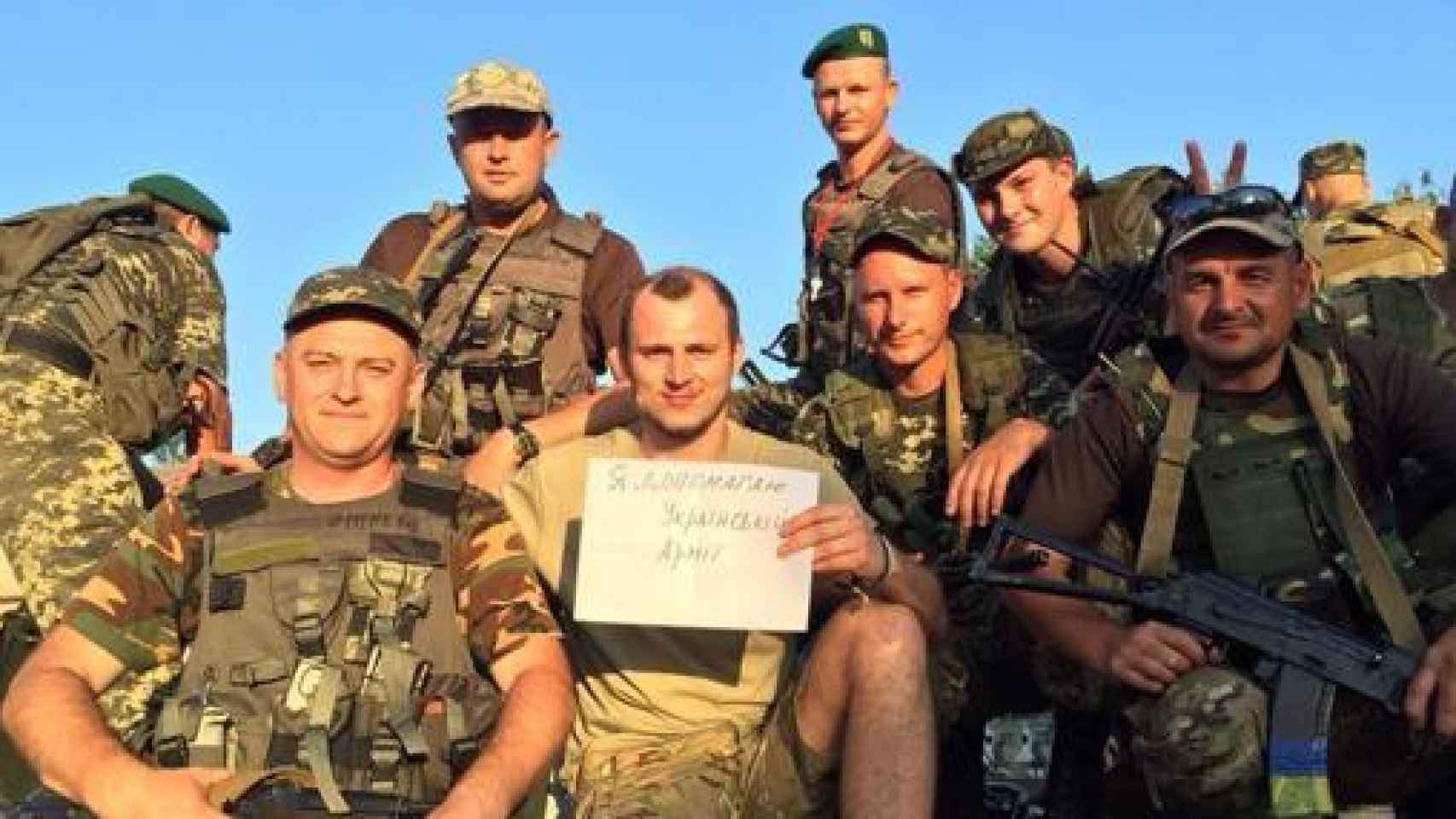
Ex – Dnipro Striker Roman Zozulya (Centre) with Ukrainian soldiers near the frontline in the Donbas
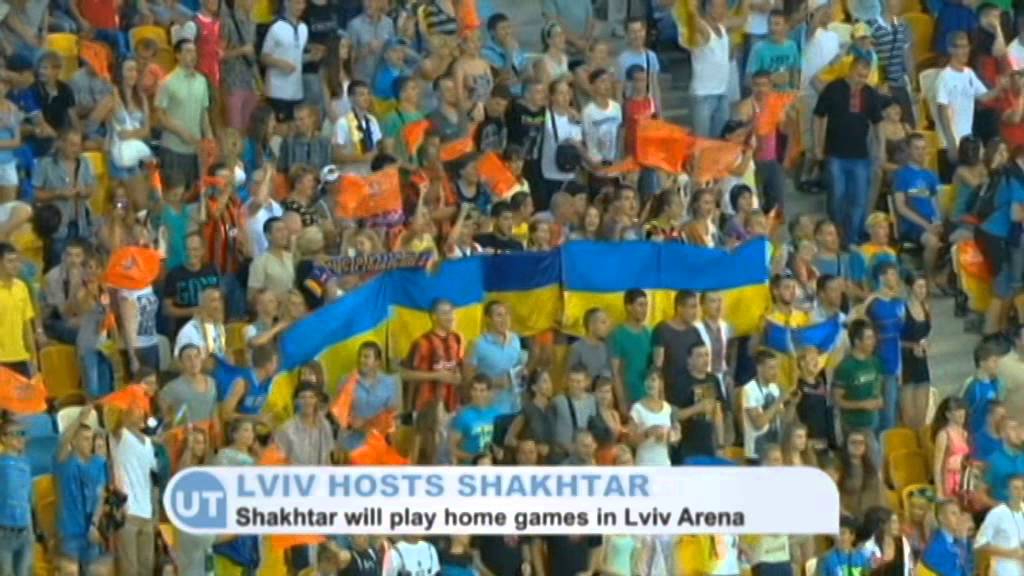
However, as a result of the conflict in the East, Shakhtar and Zorya Luhansk have been displaced from their home stadiums and from their primary support hub. This has led them to play games in Kyiv, Lviv, Zaporizhya and Kharkiv, amongst others, where they have been welcomed and supported by the local populations, especially during European matches (Furmanov, 2017). This also highlights a greater unitive nature amongst football fans across Ukraine, willing to back a once rival club and region that previously was perceptively anti-Ukrainian in its identity (Rich, 2016).  Nevertheless, what should be noted, is that despite their displacements, the clubs remained in Ukraine and both clubs continue to represent Ukraine as a nation on the continental stage. Dnipro reached the Europa League final in 2015, despite not playing a single home game in Dnipro due to safety reasons regarding the War. Their achievements also inadvertently created greater support toward the Ukrainian state due to their positive representation of it by excelling at football (Polityuk, 2015). This was also compounded by some members of the Dnipro squad visiting the frontline and actively showing support for the Ukrainian soldiers.
Andriy Pavelko, the FFU President and MP for the Poroshenko Bloc, has implemented a modernization project of the governing body. This had led to a greater impetus on the national team with matches being hosted across the country, from Lviv to Odesa to Kharkiv. A supporters’ movement aiding people to travel and see the games, both at home and away, has also been initiated in order to garner stronger unitive support for both the national team and the country in general. Kyiv also successfully hosted the Champions League final between Liverpool and Real Madrid in May 2018. Overall, the combination of the football administrative bodies approaches and supporters’ own initiatives have benefited from each other. The links between sport and identifying with the state have inadvertently been strengthened due to the greater crossing of cultural and political boundaries that previously caused rivalry. Instead they now embody a greater unity with the Ukrainian state as a whole.  
Image result for champions league final Kiev maidan
Real Madrid fans on Maidan in May 2018

Decommunisation – An essential process needed to distance the new Ukraine from its Soviet past?

Image result for decommunization
A Lenin statue being driven to the scrap heap of history
A prime example that illustrates the active nation building attempts of the post Maidan government is that of the process of decommunization. In May 2015, President Poroshenko signed the Decommunization Laws, that had been passed through parliament a month earlier, into official decree. There were four laws included in total. However, for the purpose of this blog post only one will be focused upon in depth, that being the Law ‘On condemning the communist and National Socialist (Nazi) totalitarian regimes and prohibiting propaganda of their symbols.’ The purpose of focusing on such a particularity is due to this legislation and its subsequent impact being the most visible in society. This allows a more thorough analysis of its impact on ordinary people and subsequent effect on their national identity perceptions. Essentially, the law stipulates that propaganda, symbols and any legal entities linked to either the Communist and Nazi regimes are banned. Alongside this, the legislation also orders the changing of geographical names and the demolition of monuments in relations to the latter stated regimes and related symbols (Yavorsky, 2015). The government’s intentions with such legislation are concurrent with the need to distance the Ukrainian state and its citizens symbolically from that of its Soviet past and to reiterate the notion that Ukraine is separate from Russia. 

Decommunization can technically be recognized as having been begun by civil society during Euromaidan when the main Lenin statue in Kyiv was felled by protesters. Similar events occurred across the country in 2014, including in the East and South a year before the government legislation came into law. Therefore, the insinuation of ceasing ties with Ukraine’s soviet identity in favour of Ukrainian sovereignty had already been instigated by a bottom-up approach to a certain extent. However, it is important to note that this demolishing of Lenin statues popularized as “Leninopad” and the subsequent linked official government legislation was not met with universal jubilation across Ukraine. Plokhii (2017) notes that it has been largely successful in its operational aims, as by early 2017 close to 1,300 additional Lenin monuments and statues had been removed alongside the renaming of numerous geographical locations including two oblasts and their centres; Kirovohrad now Kropyvnytsky and Dnipropetrovsk now Dnipro. But whilst such actions were dramatic in photography and symbolism, due to their removal being long overdue; many ordinary people held contempt towards the changes (Gogo,2015).

These civilians argue that rather than drastically changing the perceptions of their own Soviet identity or their attitudes towards the Ukrainian nation, the statues and street names had long lost their Soviet undertones. They had been left by inertia, with the symbols being viewed as landmarks on a map rather than being tied down to political ideology or a town’s Soviet identification (Gogo,2015). Pomerantsev (2018) illustrates this rather thoroughly through his quoting of Eastern born Ms. Vakhovska, “The statue is their personal Lenin, it’s where they used to kiss, where they stole roses from the flowerbeds, where they went on pointless parades and equally pointless rallies.” What can be taken from such a reaction is that the intention of these laws and actions have been less to do with drastically enforcing new perceptions of common history, but rather safeguarding the future from being reliant on colonial influenced perceptions of the past through its visible removal in day to day life. Over time, the changed names and vacant spaces will themselves become the norm in communities as they become the necessary markers for the future development of a society that overwhelmingly identifies with the Ukrainian nation state (Kulyk, 2015)

As Plokhii (2017) notes, the West and Centre of Ukraine had already shed most of their Soviet remnants by the 2000s but the removal of the residual statues, geographical markers and art symbolizing the bygone era and its identity, solidified their acceptance of the new independent Ukrainian state. Supporters of the decommunization scheme view it as of high importance to the progression of Ukraine’s independence and its aspirations for democratization and integration with the West (Mälksoo, 2018). With Russia reinvigorating its own Soviet past in such a vivid manner as of late, it can be seen that Ukraine and its government are acting in the correct way in order to prevent these neighbouring developments from fermenting further afield than the occupied Donbas territories and Crimea. Whilst it is apparent that this particular policy is not supported by the entire population, the decommunization legislation is vital in signifying the symbolic breaking with previously inconsistent state nation building policy. Such policy that refused to address and actively tackle the incompatible dual historical narratives, in favour of a coherent and inclusive independent Ukrainian state narrative (Kulyk, 2015).  

Does a Language issue actually exist in Ukraine? Common misconceptions debunked

Related image
Translation “One Country” in Ukrainian and Russian

Language has historically been the primary battleground around which nation building has been centred on in Ukraine. The conflict between Ukrainian and Russian speakers’ rights has often been inflated by competing political parties in order to gather support and votes during elections. It should be noted that a language divide does exist within Ukraine, however its active contribution towards the harbouring of societal divisions is greatly overplayed (Hrytsak, 2014). When focusing on nation building theory, a singular language is often needed to reinforce national unity and the stability of territorial and cultural integrity of a said nation state (Kulyk; Hromadske, 2017). Due to Ukraine’s inescapable colonial past, it should be recognised that the Russification that occurred during that period and the bilingualism that resulted from it, have remained ingrained in many areas. Thus, it is close to impossible to wholly remove such a legacy. Kuzio draws parallels to Ukraine with the prolonged use of English in Ireland, where this has also been the case (Kuzio & D’Anieri, 2002, 21).
A weak enforcement of the 1989 Language and 1998 Education Laws, alongside the Kivalov-Kolesnichenko Law of 2012, that granted minority languages greater recognition and usage in their regions, has meant that the official state language has not developed nationwide to the extent that it is unilaterally considered as an inextricable factor needed to identify with the Ukrainian nation. Government approaches have been lethargic. Such reserved attempts have allowed Russian to be used freely and remain prevalent in the majority of urban areas outside Western Ukraine. Ukrainian has remained respected but Russian has maintained its position as the primary communicator for prestigious fields such as the media, sport and the preferred language of the urban class (Kulyk, 2017, KP)
Due to the elevated position of Russian in Ukrainian society, it has created a contradictory situation where urban Ukrainians are frequented with a choice. They can either prioritise their national identity by utilizing the Ukrainian language and culture, or favour their economic and societal development which valorises their Russian equivalents (Kaspruk, 2017). Therefore, similarly to how the older working class favours its economic survival, the urban class has upheld the notion of prestige that the Russian language held during the USSR. The problem that arises from this is that whilst Ukrainian is the official state language, it is not treated as such and without a greater commitment to using a solitary language with greater consistency in the public sphere, means that Ukraine has greater difficulties in perceiving itself as an independent state separate from Russia.
Russia’s aggression and its calls to defend ‘Russian speakers’ led to an alienation of the Russian speakers who garnered no connection to Russian state despite their use of the language. It was primarily these actions from an external actor rather than the utilisation of government led policy that created the rise in national identification with the Ukrainian state. Some did renounce the Russian language as a result, but others remain resolute in continuing to use Russian for communicative purposes. Nevertheless, they simultaneously assert that they are patriotic and devoted to the perpetuation of Ukrainian statehood(Kulyk, 2016b, 91; Kulyk, 2017, KP). Even Russian commentators such as Trenin (2018) have conceded that Russian as a language has ceded its position as a political marker of identification. Therefore, the nation building process seems to be showing signs of cohesion arising from a bottom-up approach. Language, whilst divided, has become less divisive in nature due to the reduction in its politicization and by civil society identifying more greatly with the Ukrainian nation irrespective of linguistic preferences. This is most vividly illustrated on the frontline of the war in the Donbas. Russian speaking and Ukrainian speaking volunteers and conscripts originating from all regions of Ukraine have cooperated together bilingually, resulting in some success in repelling further occupation attempts of Ukrainian territory (Dickinson, 2017; Trenin, 2018).
Despite language seeming to be less of an issue in relation to the nation building process, Portnikov (2018) proposes that there still remains a need to continue the Ukrainization of the state in order to solidify separation from Russia and also to increase the competence and effectiveness of the state by being able to incorporate all citizens into a political body that can cooperate. Portnikov notes that this can be best facilitated through communicating in the same language. In Ukraine, this is highly problematic for its smaller more compactly settled ethnic minorities, namely Romanians and Hungarians, who are largely unversed in the official state tongue. This has resulted in these ethnicities remaining within their own small communities; essentially fostering their own ghettoization due to the lack of opportunities in the job market and political framework that arise from not knowing Ukrainian adequately (Kulyk; Hromadske, 2017). The current Ukrainian government has intended to rectify this through the imposition of a new law on education. It requires all state (public) education to be carried out solely in the Ukrainian language. These minority languages including that of Russian are permitted to be taught as supplementary secondary languages. However, the success of such a law rests in its implementation (Tulup, 2017). 
As Polese (2011, 47) explains, nation building success does not rely solely at the feet of the government but it is ultimately reliant on the ‘desire and capacity, by common people, to oppose or accommodate such a project.’ This is where the 1989 language law and the previous law on education of 1998 failed, with no comprehensive structure facilitating and overseeing the changes, it made their execution hard to control and measure. However, an education law alone is insufficient as has been demonstrated in the past. Without addressing the essential need for Ukrainian in larger socio economic life, such as the necessary requirement of it for public and private sector jobs, the progression of the Ukrainian language will not occur. The current administration remains hesitant to make any such radical upheavals, still trying to appease potentially hostile Russian speakers (Kulyk, 2017, KPHromadske, 2017).As Minich (2018) confirms, it is in fact the government that is holding back the nation building process in the language field. Using data from a survey conducted by the Ilko Kucheriv Democratic Initiatives Foundation, it is conclusive that whilst Ukrainians were previously deeply divided over the language and education debacle, in recent years there has been a significant increase in favour of Ukrainian as the primary language for education. 


What Will the Future Bring? – An analysis of Youth Perceptions regarding Identity and Government in Ukraine

facebook.com/petroporoshenko
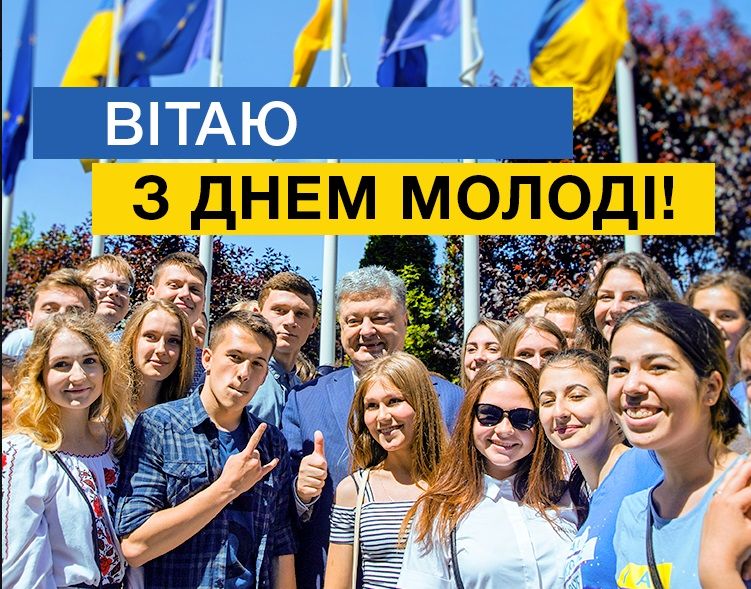
President Poroshenko greets Ukrainian Youths

Having analyzed one generational and societal class’ reasoning toward a lack of identification with the state in the previous post  it also would be appropriate to see whether Polegkyi’s claims can be supported by some empirical data relating to a different cohort of society. By using data from the Generation Z survey conducted by the New Europe Center in Kyiv, analysis can be drawn from how the future generation of Ukraine views its collective identity in light of the aftermath of Euromaidan and Russian aggression. By focusing on the age group of 14-29 year olds that has only ever known an independent Ukraine, it will be easier to grasp a more objective viewpoint, independent of past personal historical experiences that may influence older relatives and generations in their collective national identifications. The age range in question accounts for around 8 million people which is the equivalent to a fifth of Ukraine’s population and thus can give an accurate precursor for what the future of Ukrainian national identity potentially beholds (New Europe Center, 2017, 5). 

When participants were asked about identifying as ‘citizens of my home town’ this obtained the highest share of identification across the country with that also being uniform in individual regions. However, when asked whether they view themselves as Ukrainians by nationality a resounding 95% agreed – this majority is even prevalent in Eastern Ukraine where 88% of participants regarded themselves as Ukrainian. From such results it can be gathered that the younger generation of Ukrainians embraces a dual-identity, holding a sense of belonging with their hometowns, whilst on the larger scale identifying as Ukrainians by nationality. However, they view those in control of the state apparatus as corrupt. Political leaders were viewed with severe distrust, with 74% showing such a lack of confidence in politicians (New Europe Center, 2017, 7). Therefore, it can be inferred further that the youth interpret a differentiation between identifying with the Ukrainian state due to its distrusted officials, and view their own civic Ukrainian national identity being detached from this. Alongside this data, a poll conducted by the Gorshenin Institute, concluded that this younger generation views itself as Ukrainians far greater than older ones (New Europe Center, 2017, 28-29). 
These findings highlight that regionalism is in part an inaccurate phrase used to justify the ineffectiveness of state induced nation building, as this age group, whilst identifying closely with their own towns, showed great commonality in their association with the Ukrainian nation. This seems to insinuate that bottom-up civic nationalism has become the most popular identification marker across the country, with it being more accepted that traditional ethnic markers such as language and ethnicity are no longer the constrictors of defining what it is to be a Ukrainian. This civic cross-regional approach demonstrated its growth during the Euromaidan when protests occurred in all administrative regions of Ukraine. In comparison, whilst similar civic action during the Orange Revolution was almost entirely focused within the West and Centre. This also seems to explain why Ukrainians have unilaterally rejected separatism and increasingly favour a Ukraine independent from its historical imperial neighbour.  

This analysis propagates that the Ukrainian nation building project has been undertaken more effectively from a bottom – up approach across the regions and less so from the direct instruction of Kyiv. The more educated citizens have reached decisions themselves about their identity, due to the repercussions of nationwide events and the actions of an external actor attempting to infringe their independence. This has led to a greater embrace of European democratic values supplemented by Ukrainian ethnocultural markers. The ethnocultural factors are less of an ideological daily influence, rather they signify a greater acceptance of Ukraine’s unique history and traditions as being separate from that of the Russian state (Kulyk, 2016a, 607). Whilst this identity still remains stronger in the western and central regions, the dividing line that used to differentiate those with exclusive Russian and Soviet sympathies and those with Ukrainian ones, has moved further East towards the Donbas and its local urbanized regions where regional association, Soviet nostalgia and calls for some economic alignment with Russia still persists to some degree (Kulyk, 2016a, 607). New dividing lines have opened up for exploitation by political elites to take advantage of. By having less ability to focus on ethnic and identity cleavages as they did so in the past, the new electoral battlefield seems to be gravitating around divisions relating to economic grievances, NATO membership and the prospects for the war torn East and the ways in which to resolve and reintegrate the territories (Minich, 2018).  


The Impact of Economics, Elites and the Urban Working Class on Ukrainian Identity

Image result for ukrainian oligarchs
Notable Ukrainian Oligarchs – (L – R) – Dmitry Firtash, Rinat Akhmetov, Ihor Kolomoyskiy, Petro Poroshenko, Viktor Pinchuk

Although civic identification with the state may have increased for some as explored in the last blogpost; for a large proportion of the working class and their oligarch superiors, identifying with the state is less of a priority compared to economics and its distribution. This, in turn, has impacted on nation building’s scope and reach towards those who have been traditionally reluctant to embrace it. Oligarchs have been ever present in Ukrainian society and politics since the Soviet Union’s collapse. Their economic power and influence over key industries and jobs has been used to deform the nation building process to their own advantages. This corruptive approach, which was commonplace before Euromaidan and the conflict with Russia, has persisted to varying degrees since. In conjunction with this, ‘a “get rich” ideology without moral or cultural values’ is the main philosophy that drives many ordinary urban citizens’ lives. Making money and surviving is prioritized above any ideological identifications (Korostelina, 2013,297). Once again, this highlights how difficult it is for a top down government led approach to implement effective methods to create a cohesive identity. 

The new government has often spoken about the need to tackle internal corruption alongside its persistent rhetoric and action against the Russian state. This has sent out a message for all ordinary citizens to rethink their association with the neighbouring state, regardless of previous ties and to show greater support for the integrity of the one they reside in. However, reforms on the economy and the clampdown on corruption have not been widespread. The oligarchs hold greater political influence than the government within their strongholds, due to the fact that these regions are quite distant from Kyiv’s centralised authority (Dabrowski, 2017). It is the government administration’s ineffective implementation of legislation and schemes relating to the furthering of both nation building and economic redistribution from the centre, that has meant attitudes have not been altered greatly amongst the older population. 
Oligarchs act in a tribal manner in their support for politicians and political parties to protect their vital interests. Especially in the East, oligarchs such as Akhmetov, rely on trade with Russia to maintain their fortunes, therefore they have consistently favoured stronger ties with the neighbouring country (Neef, 2014). During elections, mobilisation through the forms of bribes and propaganda in the workplaces they oversee are used to coerce the politically alienated to vote for those most appropriate for the maintenance of the oligarchs’ political and economic interests. As they are often the key employers due to their monopolisation of the lucrative industries in the more industrialised East and South East, there is little the government has actively attempted to do to reduce the oligarchic grip over these regions. This is due to their weaker political and economic sway over the local urban working classes compared to the oligarchs (Kozloff, 2015).
Economics are the primary influencer for many ordinary citizens and this subsequently guides their political outlooks and daily motivations. These socio-economic personal priorities are what led many citizens in the South East and Eastern regions of Ukraine to vote for independence in 1991. They had limited association with the ethnos of the Ukrainian nation, but remained optimistic toward wanting to be a part of the new state building project. This was due to the supposed promise of democratisation and prosperity that, in its dying years, the Soviet Union declined to provide and something independence was supposed to rectify (Kuzio, 1996, 585)
In hindsight, this has not played out as the population had hoped. Corruption has remained rife and has embedded itself in almost all aspects of Ukrainian society. This, added with an extended economic decline and the lack of modernisation in the traditionally Soviet identifying industrial areas, has led to the population’s complete economic disenfranchisement with the Ukrainian nation. It was the potential of an increased living standard and economic situation that tied them to the state in the first place. This was a result of the primary culture revolving around ‘looking after one’s own’ and of ‘winner takes all’ persisting (Wilson, 2016, 637).
This has subsequently resulted in low level patriotism being drained out of the urban areas and thus, any government led nation building projects are seldom welcomed and acted upon. This older working class generation draw connections with their poor economic status to the ceasing of the communist system where they reaped the benefits of state welfare, stable income and employment. It is the nostalgia for those times that prevents them from positively approaching and embracing the current Ukrainian state (Polegkyi, 2015, 8). Reactionary legislation to the war with Russia, such as the banning of Russian media channels and decommunization, have been met with further alienation toward the Ukrainian state (Miller, 2017). However, patriotism does still exist for some amongst the urban working class. A large number of the soldiers fighting and many of those who have died in the Donbas, are either natives of the region or from its nearby localities, but this recent arousal of cohesive national identity has not been overwhelming in its nature (Glasnost Gone, 2018). Their identification with the Ukrainian state is less to do with government policies and more to do with defending their own towns and territory from the infringement of Russian aggression. 
Due to the poor economic situation which has been compounded further due to the war and the traditionally low national consciousness, support has maintained for the Opposition Bloc, the new reincarnation of the Party of Regions (Druckman & Laroque, 2017). Whilst also corrupt themselves, they show sympathy for the middle aged and older local populations of the East, by claiming to represent their interests for greater decentralisation. They also strive to defend the regional identities against the imposition of the culturally enthused civic Ukrainian identity that Kyiv attempts to push through via the media and legislation. The Soviet identity has been maintained, as people looked toward Moscow as the model for prosperity instead of Kyiv. Their outlooks have reverted back to how they perceived themselves before independence and galvanized by nostalgia, long for the slightly improved economic times that existed during the Soviet period (Rodgers, 2012, 63). 
Essentially, those most alienated by the concepts of both the ethnocultural and civic parts of Ukrainian identity, are those working class citizens from the urbanized industrial centres of Ukraine. They maintain their association solely with their city as they see their current country’s government as having done nothing for them (Wilson, 2016, 638-639). This, combined with no association to traditional Ukrainian culture or Western liberal values, due to being the descendants of ethnic Russians who emigrated to the area for work during the Soviet period, or due to the enshrining of Soviet culture and values in an area of weak national consciousness and political engagement, has resulted in a difficult to alter identity. Compounded with corruption damaging state apparatuses and the increased attempts at the severance of ties with the entire state’s Soviet past, means there is less of a chance for this part of the population to feel closer identification with the Ukrainian state.


Identity in Ukraine’s South and South East regions – Realities and Misconceptions

Ukraine_KIIS-Regional-division2
Map of contemporary Ukraine


Outside of the occupied territories, Ukrainian forces have established a united front against the Russian aggression. Local businesses, civil society and oligarchs have bounded together through a shared common interest focusing on the need to maintain order and stability in the regions closest to the conflict. The driving force for this unity is characteristically tied down to the maintenance of Ukrainian sovereignty against a common enemy; Russia (Trenin, 2018; Kulyk, 2016a, 589). It is the combination of pro Ukrainian elites and civil society that have catalyzed the rise in collective identity in the East. As Zhurzhenko (2014, 262) notes that Dnipro and Kharkiv have been the main support centres for the Ukrainian volunteers fighting in the Donbas; whilst across the Eastern and South Eastern cities there has been a rise in the public display of symbols and colours which are associated with the ethnocultural Ukrainian identity. Rather than the government in Kyiv implementing such schemes, who have little agency in the enforcement of certain nation building processes, it has been civil society that has taken the task upon itself to instigate the rise in cohesive behaviour in favour of an independent Ukraine (Pomerantsev, 2018)

Using survey data that Chaisty & Whitefield (2015) conducted, there is conclusive evidence that outside of the Russian separatist controlled territories there does not persist any further support for separatism, rather they collectively defend the notion of remaining as part of the Ukrainian state (Schneider-Deters, 2015). Russian aggression has alienated the majority of those in the East and South East, who in the late 1990s showed their highest proportion of popular support for unification with Russia, registering at one point at 70% in favour (Kravets, 2017). By July 2015, public opinion in government controlled areas of the Donbas showed 0% favoured secession, whilst support for unification with Russia tallied at 4.8%. The region is now indifferent to the rest of Ukraine in its outlook. There is now continued preference for remaining as part of Ukraine whilst being granted greater benefits through the decentralization process (Bekeshkina, 2017, 27).


Identity in the current Russo-Occupied Ukrainian Territories – Realities and Misconceptions

Image result for ukraine occupation
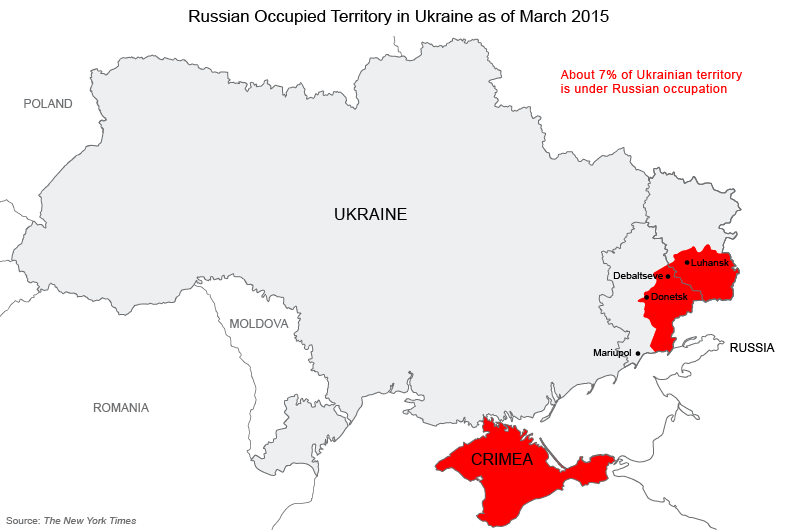
Due to the annexation of Crimea and the occupied territories of the Donbas by the Russian military and local separatists, it has made it difficult to be able to accurately measure collective identity perceptions in these regions. As their separations from Ukraine were forcefully undertaken through military means, the new status quo of Russian control has seemingly detached the populations away even from having a civic identification with Ukraine. It seems extremely unlikely that any of the territories will be reassigned back under the full control of the Ukrainian government in the near future. It is therefore important to understand why these regions have seemingly lost all attachment to the Ukrainian state.

Ethnic Russians have always been a majority in the Crimea and identified that way in the last available census of 2001, with over 58% of the peninsula viewing themselves as having Russian nationality (CCSoU,2001). It is difficult to know to what extent this ethnic identity outlook was objective. The Soviet ethnicity concept mentioned earlier, revealed that many approached their national identities in a subjective and unemotional way. Nevertheless, when Russian special forces took over and annexed the area in Spring 2014, limited resistance ensued from both the citizens that resided there and even from the Ukrainian government. This was a result of a combination of the Ukrainian armed forces being dilapidated, alongside Crimea’s cultural and political detachment from Ukraine, which it had exercised since 1991. The lack of struggle and welcoming by the majority of Crimean citizens for their Russian occupiers, who had never viewed themselves as part of the collective Ukrainian identity, was subsequently unsurprising (Motyl, 2015). 

Whilst the current Ukrainian government refuses to acknowledge the annexation, many Crimeans themselves have limited pull factors for the return of their territory to Ukraine. Limited cultural, political and economic reasons resonate with them towards Ukraine due to personal and historically close ties with Russia. Prior to the annexation, Crimeans were becoming less satisfied with the functioning of the Ukrainian state, with it having a poor economy, currency and lack of decentralisation; it perceived that the government in Kyiv was neglecting it. This, accompanied with the frequented exposure of Russian government controlled media with amplified discretions and numerous invented smears about Kyiv; in turn solidified the weakening of any kind of allure towards identifying with the state their territory previously belonged to (Zhurzhenko, 2014, 251; Sotiriou, 2016, 64)

However, not all of the Crimean population harbours such an outlook. The minority Crimean Tatar population always held closer civic identification with the Ukrainian state. However, due to their small numbers they were unable to influence the annexation outcome. Many have since left for mainland Ukraine, whilst those who have remained have experienced persecution for their association with the Ukrainian state (HRW, 2017).

The authorities in the so called DNR and LNR quasi-republics have also decimated Ukrainian identification through the use of Russian propaganda, coercion and the manipulation of the largely older generation, by attempting to reincarnate a miniature version of Soviet Republics. With similar grievances to that of Crimea, hoping for greater decentralisation and traditional closer associations with Russian and Soviet culture and values, those that have remained within the ‘separatist’ territories have done so due to their lack of attachment to the Ukrainian state, which they never truly resonated with. Whilst the lawlessness and foreign military presence also play a role in influencing national identity perception through the portrayal of Ukraine as a common enemy, it was the already weak connection to the Ukrainian collective identity, primarily in the urbanized areas of Donbas, thata significant part of the populationhave maintained enmity towards the Ukrainian state and its government (Schneider-Deters, 2015; Sotiriou, 2016, 64)

Regional Diversity in Ukraine: A Prologue

Related image
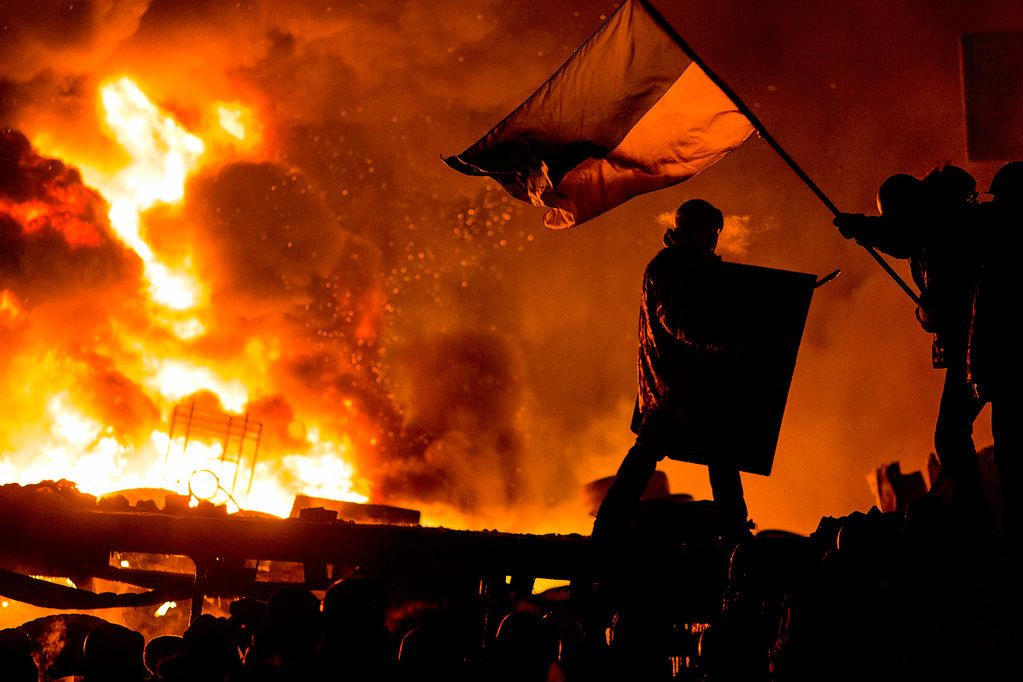
Euromaidan circa 2014

Having analysed the nation building attempts of the first 22 years of Ukraine’s history in the last blog post, it is clear to see that it had been relatively difficult to portray and promote a cohesive identity resonating towards the state. However, the positives that could be drawn from the period until early 2014 were that Ukraine functioned as an independent state, had control of its borders and no separatist or ethnic conflict had broken out, despite the eclectic views to Ukrainian identity from different regions of the country. As defended by Kravets (2017), the notion that identity differentiations exist in Ukraine do not immediately lead to detrimental circumstances toward the nations existence; rather the de facto allowance of identity variations have created stability by allowing citizens to coexist in their own areas peacefully, whilst identifying with the state primarily through civic means. 

Before an evaluation in of any potential changes to regional dynamics since 2014 can take place, a brief background to the Euromaidan needs to be addressed. Euromaidan sprouted in Kyiv from outrage towards Yanukovych’s decision to shun the signing of an Association Agreement with the EU in favour of joining a customs union led by Russia. After the violent beating of students by government led police forces, Euromaidan switched its protesting scope toward the ousting of the corrupt government and the upholding of liberal democratic values. The pro- Russian administration overstepped its mark and resulted in killing over 100 protesters before many of its elites fled the country, including President Yanukovych. As Ukraine attempted to start afresh after such a watershed political moment, Russia quickly annexed Crimea and militarily intervened in the Donbas (MFAUKR, 2018).
Rather than the incumbent government initiating any immediate nation building procedures, it was through Russian aggression combined with Yanukovych’s harsh and corrupt actions, that ordinary Ukrainians had “gained a new sense of solidarity and identity as a broad movement toward civic and moral renewal” (Diuk, 2014, 88). The dictatorial nature of Yanukovych’s actions galvanized support for democratic values and norms. Subsequently, by trying to disrupt and undermine Ukrainian sovereignty, Putin had in fact increased cohesion between Ukrainians who had, for once, something to unite behind; a common enemy and common values. As Diuk (2014,89) quotes – the general consensus around Maidan was “We came to the Maidan looking for Europe, but instead we found Ukraine.” However, whilst national identity did solidify amongst those who participated and supported Maidan, it is important to see whether this was reciprocated across the country. 
Ukraine’s supposed problem with its regional divergences has been written about by numerous academics such as Sasse (2001) since Ukraine obtained its independence, namely referring to it as a ‘state of regions’. In such papers the analysis leans toward the oversimplified view of the Pro – European western part of Ukraine rivaling the pro Russian / Soviet East in an ideological tug of war, as the politicians had led many to believe. Whilst geographical patterns do garner some links between language spoken, domestic views and foreign policy outlooks, these are by no means definitive as to why Ukraine has been unable to create a unitive national identity and why its citizens associate with particular leanings towards their past and futures. Polegkyi (2016) views the primary divisive markers between Ukrainians today as being related to societal class, generational perspectives and their collective worldviews. 

A Divided Nation? An analysis of early nation building attempts in a newly independent Ukraine

Former Presidents of Ukraine – (L – R) – Leonid Kravchuk, Viktor Yanukovych, Leonid Kuchma,  Viktor Yushchenko

From the outset of independence in 1991, the Ukrainian nation building project ran into socio-political and cultural problems. If the government were to impose a Ukrainisation policy, it had the potential to cause ethnic conflict due to the large Russian minority and number of ethnic Ukrainian Russian speakers who identified heavily with the Soviet national idea. In other post soviet states, such as the Baltics, there were greater fears of tensions due to larger Russian minorities. However, their elites were much clearer about their own national identities. This enabled them to act more conclusively (Chalabi, 2014). 

Anti – Soviet sentiment was higher and stronger politically than in Ukraine and thus it was far more straightforward for their elites to enforce their nation building projects and instill their ethnocultural based national identities as the new hegemony (Zhurzhenko, 2014, 252). Therefore, it was due to the weakness of the Ukrainian state’s political hegemony, Ukraine’s elites continuing to harbour communist sentiments themselves and the government’s fears of ethnic conflict, that everyone who found themselves on the territory of independent Ukraine was granted citizenship. Furthermore, the centrist government, wanting to maintain its power and legitimacy, favoured a more liberal policy as it portrayed them as neutral civic alternatives to both the ‘anti – Soviet/Russian’ and ‘anti – Ukrainian’ political camps for the formidable future (Shevel, 2004, 11). This worked formidably for presidential candidate Kuchma in both 1994 and 1999 as he stood against the nationalist painted Kravchuk and Communist Symonenko, and beat both on the card using identity politics to draw in votes, but did little once in power to impose a unified identity around which all Ukrainian citizens could distinguish themselves with (Wolczuk, 2000, 680).


With some parts of the demographic still resonating deeply with the Soviet Union, Ukraine’s soviet identity was decidedly not relinquished. Instead it was amalgamated with ethnocultural Ukrainian history and culture which derived from the Ukrainian People’s Republic, the Zaporizhian Host and Kievan Rus, in the government’s attempts to satisfy all citizens. With essentially competing conceptions of nationhood coexisting, the newly independent Ukraine inadvertently became a “civic nation by default” rather than by design (Shevel, 2004, 4-5). By not cleanly breaking from its Soviet past, there was no clear consensus amongst the general population towards what kind of collective identity they would cooperate with in the nation building project. Weak political infrastructure, ineffective imposition of rule of law and the constant distorting of historical and cultural memory from all sides of the political spectrum, were all factors as to why Ukrainian citizens were not able to unilaterally identify with the confused idea of the state. (Zhurzhenko, 2014, 254-255). 

The ‘top – down’ approach to nation building in Ukraine has been half- hearted and easily manipulated from its conception. Nation building in academic literature often infers that it is primarily the government’s initiative that spurs the process and maintains its progression through laws and funding (Polese, 2011, 47). However, by applying this to Ukraine it can be seen that its governments have often skewed the national identity problem to their perceived advantage; rather than intending to create societal cohesion they have pulled on the cleavages to further either their own interests or to prioritise a particular ethnic group at the expense of the others. 


This can be most vehemently illustrated during and after the Orange Revolution of 2004. Yushchenko advocated a Ukrainian civic national identity that was tied to a Ukrainian ethno-cultural base and garnered fervent support from those who opposed the coexisting veneration of Soviet culture and history. On the other hand, the Party of Regions and the Communist Party utilized the displeasure and fears of those with Soviet sympathies and used identity politics themselves as a tool for the garnering of popular support and furthering their own vested interests. By simplifying Ukraine’s identity divisions into a stand off between a ‘nationalist’ West against a Soviet – Russian sympathizing East and South East, the Party of Regions’ elites succeeded in driving Ukrainian national cohesion further apart, undermining Yushchenko’s own presidential tenure and then being able to succeed him with their own candidate Yanukovych (Kulyk, 2016a, 592; Zhurzhenko, 2014, 254-255). 


Once in power, the Yanukovych administration neglected the nation building project, preferring to maintain the limbo of diverging resonations to the idea of the national self. It can be inferred that during this period, efforts were actually made to weaken national unity by permitting the Russian language to be officially used at regional levels where national minorities exceeded 10% of the population. This is contrary to the views held by academics such as Korostelina (2013,297) who claim that the Yanukovych era focused on the de-ideologization of society. In reality this created greater grievances amongst those supporting the Ukrainian ethnocultural identity, claiming it undermined the Ukrainian language and its role as the official state language set out in the Constitution of 1996 (Riabchuk, 2012).


Therefore, it can be envisaged that Ukrainian nation building up until 2014 fared relatively unsuccessfully in creating and maintaining a cohesive national identity. There are numerous reasons as to why the nation building project advanced so lethargically and poorly. Polese (2011,47) correlates nation building success with the ability that elites have to implement and impose their chosen methods and to what extent the general public has the power to reject or undertake such asked of measures. In both instances across two decades, Ukrainian elites approached the implementation of nation building processes such as language and education laws by rarely acting upon their own rhetoric or legislation. Due to the lack of a tangible and coherent Ukrainian national identity being articulated from above, many citizens never became engaged in the process themselves. 


Funding and application of the various schemes was not worked upon and with no formal incentives to motivate local administrations or citizens, this resulted in the status quo being maintained. This status quo was the amalgamated version of Ukrainian history and cultural practices and its Soviet counterpart being venerated equally in society. This left a perpetual confused identity for Ukrainian citizens, with the combination of such histories and practices being used to win votes and create greater divisions within the country, with some leaning towards closer ties with Europe while others hoping for stronger relations with Russia.